 ArtoEast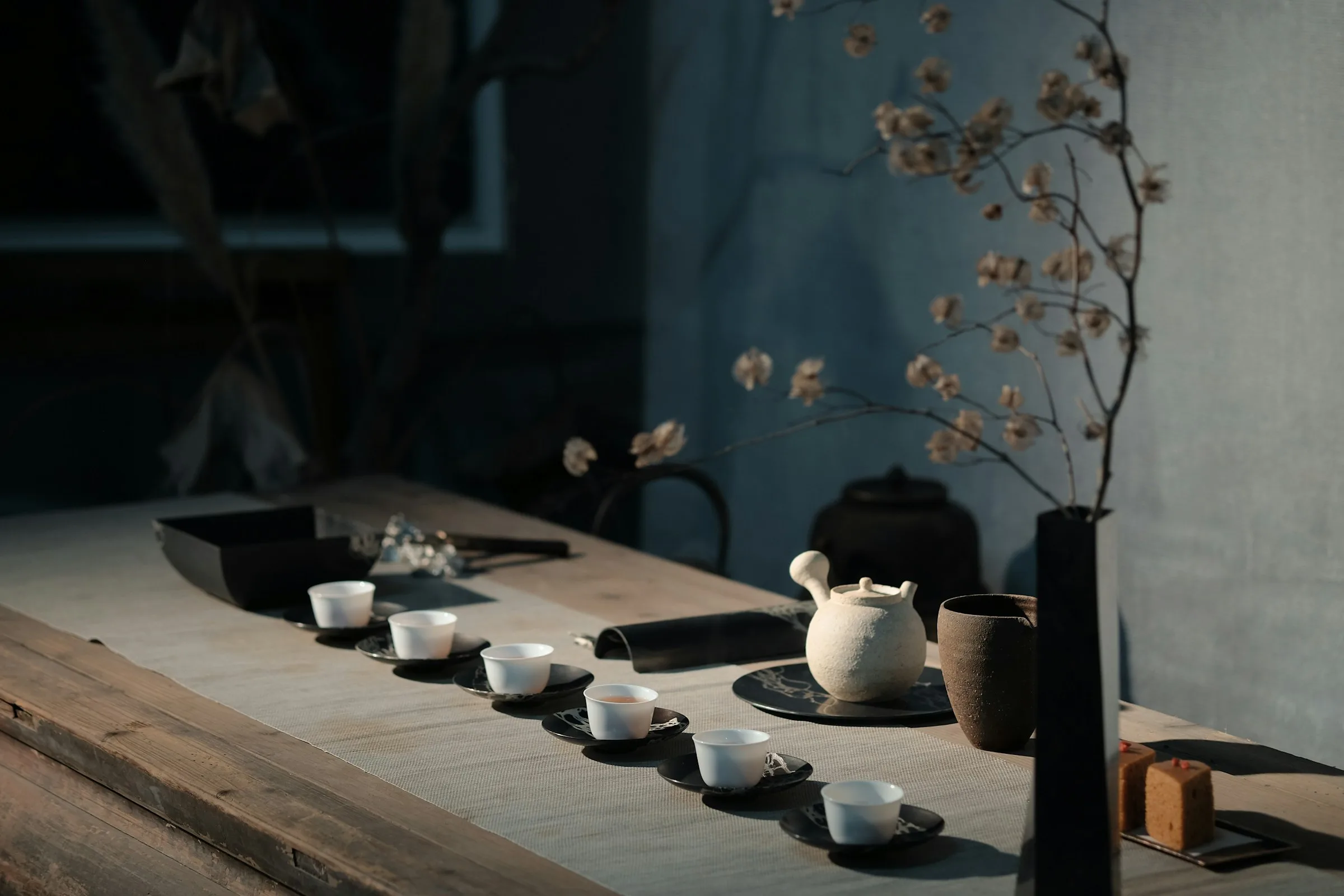
The Ways of Chinese Tea
A leaf, a fire, a kettle — and a thousand years of attention.
From ancient forests in Yunnan to cliff gardens in Wuyi, we sit with the growers, roasters, and gongfu masters who keep Chinese tea a living conversation between soil, hand, and cup.
A lens, not a checklist.
Tea in China is less a drink than a way of paying attention — to weather, to mineral, to the moment water meets leaf. This is fieldwork across regions where the plant, the picker, and the pot each carry their own dialect. We move slowly: a morning in a Yunnan forest where ancient Pu'er trees are still harvested by hand, an afternoon by a Fujian rock face where Wuyi yancha takes on the taste of the cliff itself, a late evening in Chaozhou where a small clay pot pours twenty rounds without hurry.
The people we sit with are growers, roasters, ceramicists, and gongfu cha practitioners — many from families who have tended the same hillside or kiln for generations. We attend their work rather than watch it: turning leaves on a bamboo tray in Hangzhou's Longjing villages, listening to a Wuyi master explain why the second roast matters, following the old tea-horse road south from Yunnan where bricks of compressed leaf once travelled by mule into Tibet. The conversation is the tea, and the tea is the conversation.
What this experience touches.
We are not a tour company. Each program is shaped to who is coming — these are the threads we tend to weave when we run this experience, not a fixed route.
- 01
Ancient Pu'er forests of Yunnan
We walk into the Bulang and Yiwu mountains, where Pu'er trees several hundred years old grow among broadleaf forest, not on plantations. Growers from Dai and Hani villages show us picking, sun-withering on bamboo, and the long, patient ferment that turns a green leaf into a tea that ages like wine.
- 02
Longjing pickers in the Hangzhou hills
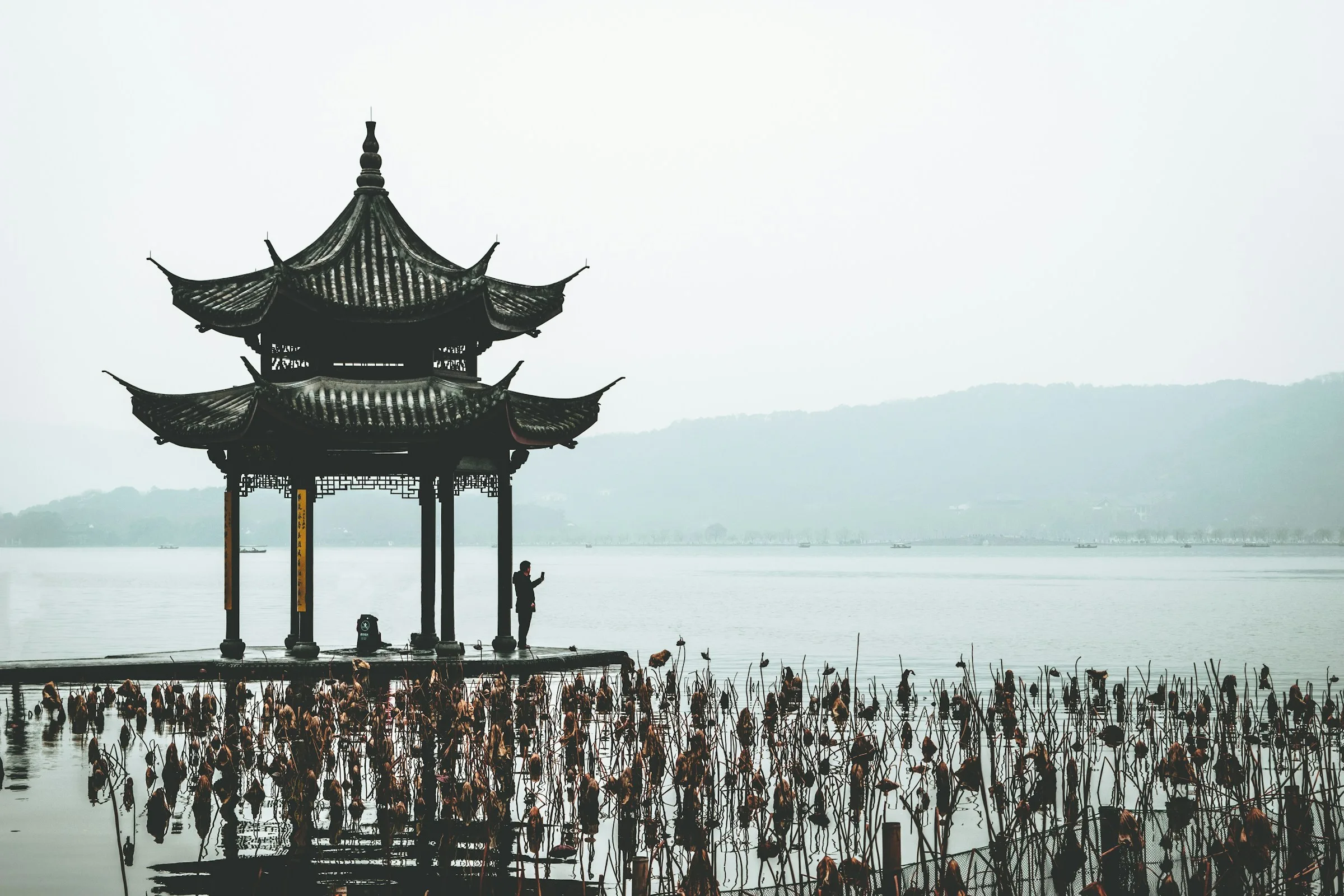
In the West Lake villages of Meijiawu and Longjing, we sit with families who hand-pick before Qingming and pan-fire the leaf in a shallow wok at the right exact heat. The flatness of each leaf is a signature; the chestnut note in the cup is the wrist's memory.
- 03
Wuyi rock-tea and the cliffs of Fujian
Among the red sandstone gorges of Wuyishan, yancha bushes grow from cracks in the rock and take on what the Chinese call yan yun — rock rhyme. A roaster in Tongmu village walks us through the charcoal baskets and the second and third firings that give Da Hong Pao and Zheng Shan Xiao Zhong their long, mineral finish.
- 04
Gongfu cha at a Chaozhou table
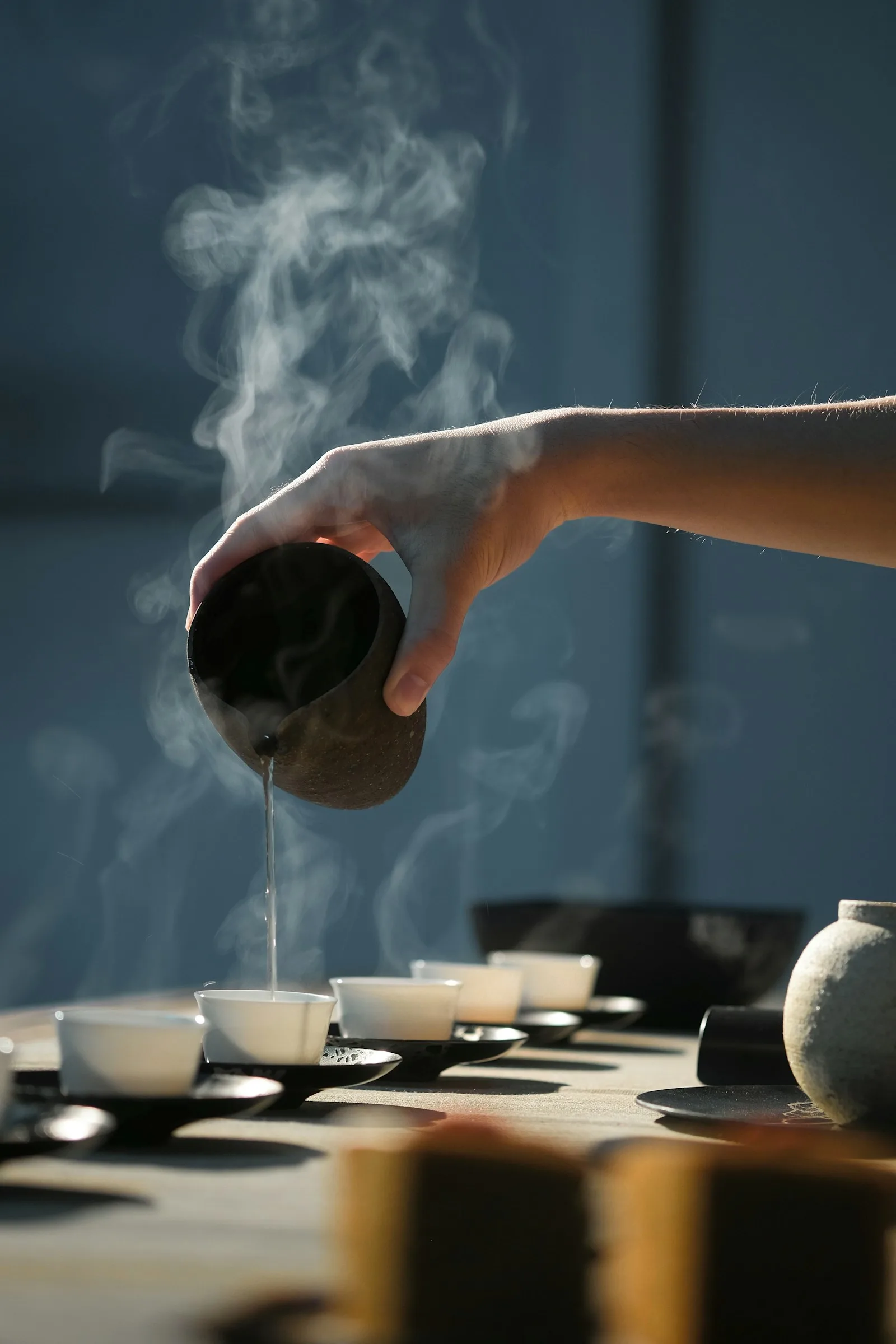
In the lanes of old Chaozhou, gongfu cha is a household grammar, not a performance. We sit around a small zhuni pot with a Phoenix Dan Cong roaster, learning how the cup is rinsed, how the second steep is the real introduction, and how a single bush on Phoenix Mountain can taste of almond, gardenia, or honey.
The regions this experience leans on.


Field notes through this lens.
Dispatches from programmes that drew on The Ways of Chinese Tea. The shape of the work, in long form.
 Field notes5 min
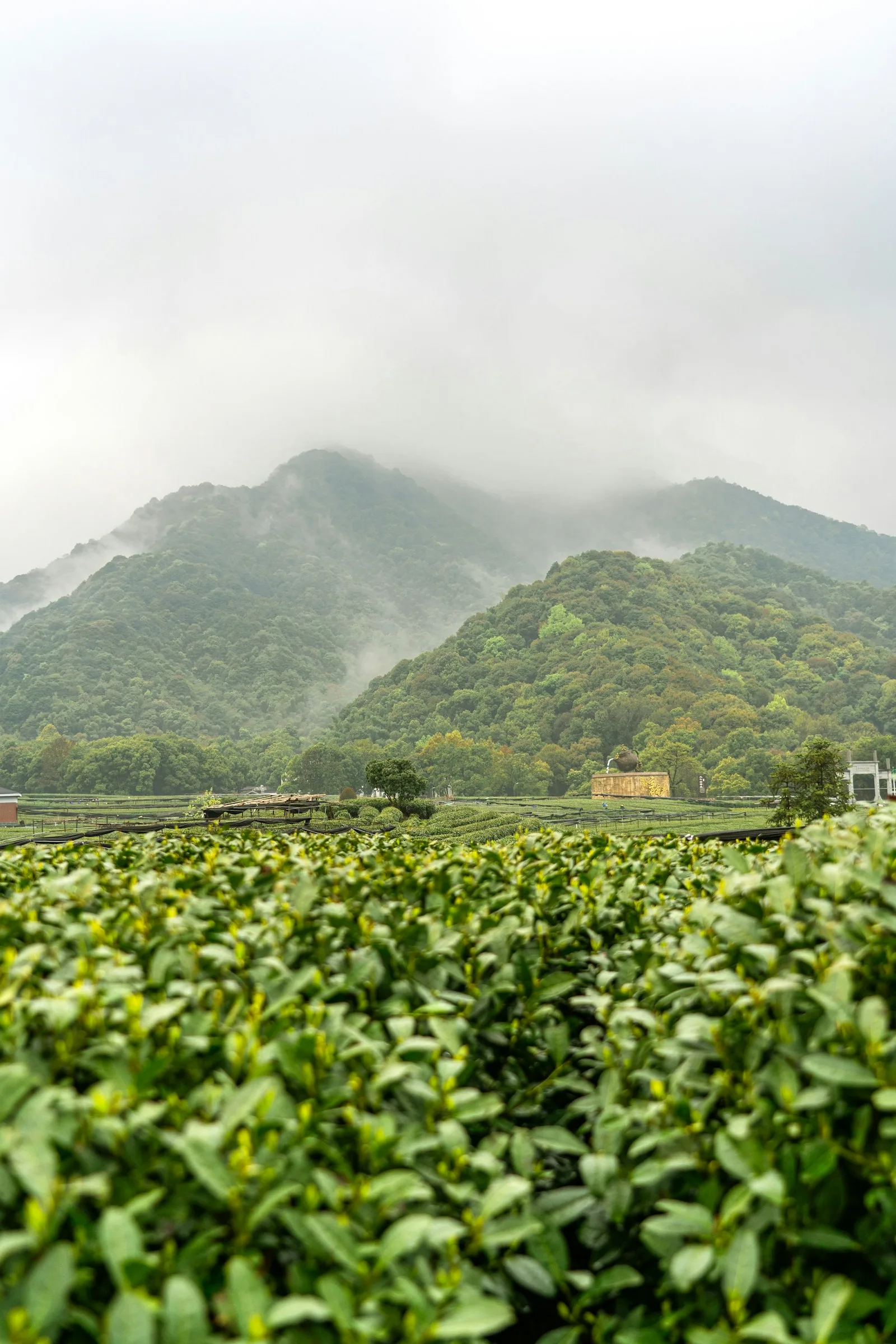
A morning with an Anji baicha grower in the cloud
20 June 2026
 Field notes5 min
An afternoon with a Phoenix Dan Cong grower at altitude
20 June 2026
 Field notes5 min
A morning in a Duyun maojian garden above the Jianjiang
19 June 2026
 Field notes4 min
A Mengding shan spring garden at dawn
19 June 2026
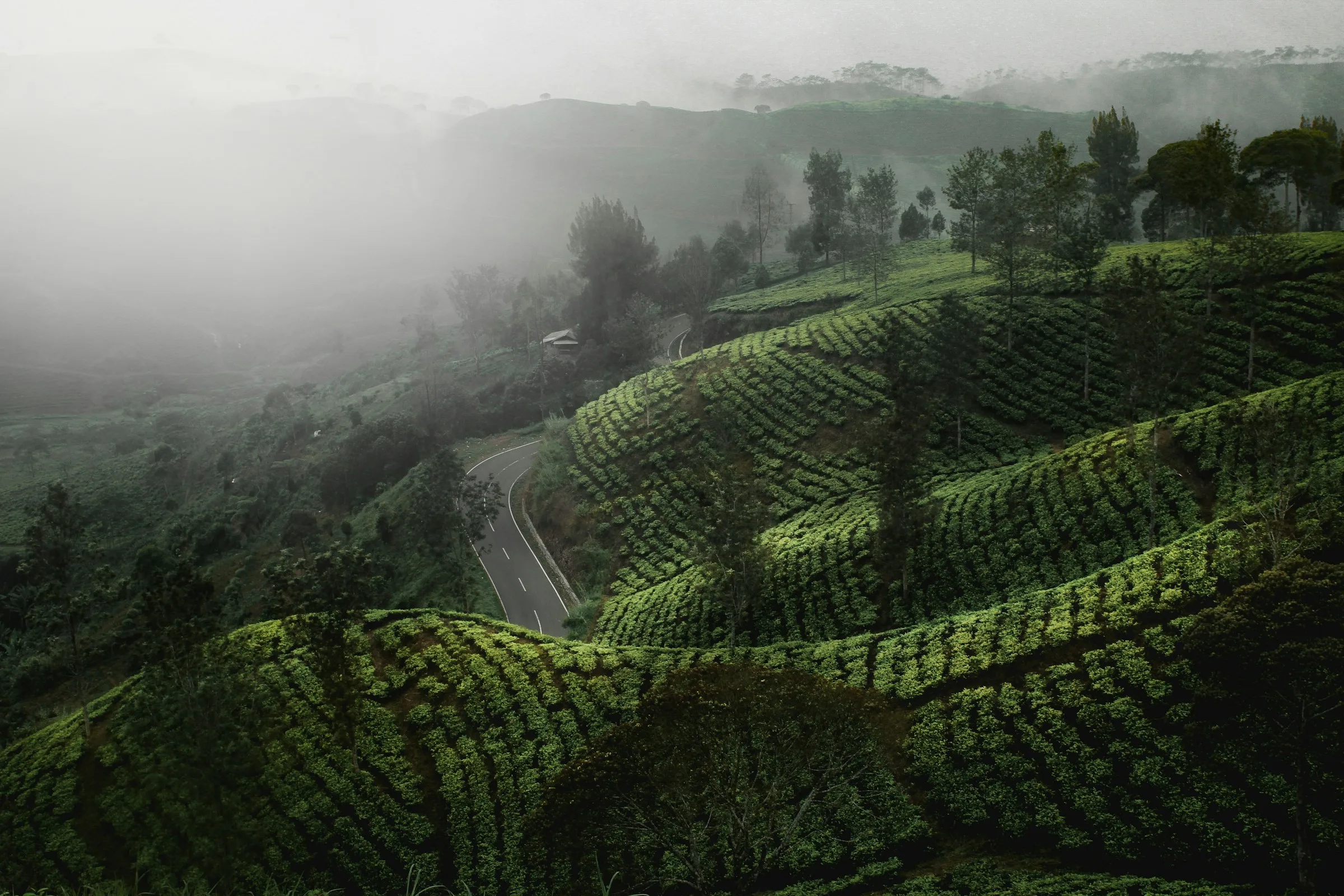 Field notes5 min
Pu'er forest mornings, before the road
12 June 2026
 Field notes6 min
A week with a Wuyi rock-tea roaster
22 April 2026
Photography by 五玄土 ORIENTO via Unsplash.
Bring your delegation, your institution, or your curious community to the real East.
Tell us who you’re bringing and what you’re looking for. We’ll design the program around it.