ArtoEast
A morning in a Duyun maojian garden above the Jianjiang
A south Guizhou hillside where a third-generation maker walks us through a tea named for its hooked tip and the cloud that grows it.
The first sound was the bamboo. A length of split cane, lashed to the gutter of the drying shed, was filling and tipping with the runoff from a fog that had not quite become rain. We had walked up from the village before five, by torchlight along a path slick with pine needles, and arrived at the garden gate as the sky began to grey behind Douji Shan. Luo Shifu was already on the slope, standing still between two rows of bushes, one hand cupped under a leaf, listening to the cane fill.
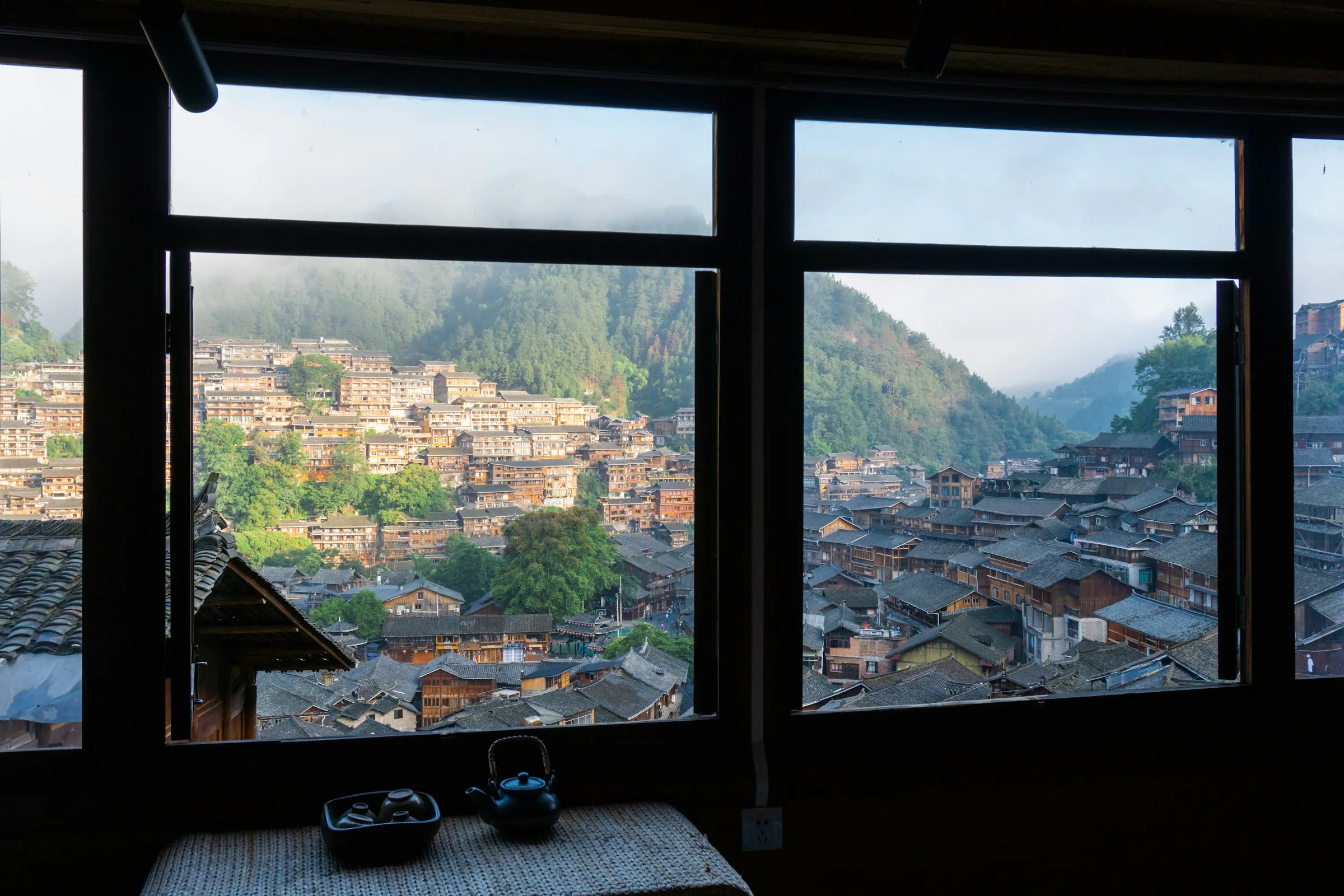
Duyun sits at the southern edge of the Miao and Bouyei prefecture, about two hours by car from Guiyang on a road that climbs and falls through karst the colour of wet slate. The garden is on a north-facing slope at around 1,300 metres, above the Jianjiang where it bends west, in a band of land the locals call yun wu shan, the cloud-and-fog mountain. Luo is fifty-six and has worked this hillside for forty-one years. His grandfather planted the first rows in 1956, when the cooperative was formed; his father took over in 1982, when the household responsibility system returned the bushes to the family. Luo took over in 2009, the year his father's hands gave out.
Maojian, literally fur-tip, names a green tea picked when the bud and the first leaf are still bound together and the bud still wears the white down it grew through the winter. Duyun maojian is the southern cousin of the better-known Xinyang version from Henan, and it has been on the official list of China's ten famous teas since 1956, when a small parcel sent to Beijing came back with a four-character calligraphy from Mao that the prefecture has not stopped quoting. Luo mentioned it once and did not return. He was more interested in the leaf in his hand.
The leaf was small. He held it out without picking it: a single bud, perhaps eight millimetres long, and one half-unfurled leaf curving away from it, both wet from the fog. The pickers, he said, would arrive at six and take only this configuration: yi ya yi ye, one bud and one leaf, picked with the thumbnail rather than scissored. A skilled picker, in a good morning, gathered enough for perhaps two hundred grams of finished tea. Two hundred grams was four hours of bending.
“A skilled picker, in a good morning, gathered enough for perhaps two hundred grams of finished tea.”
By seven we were in the processing room, a low stone building where three iron woks sat in a brick stove fed from below with split oak. Luo's wife, Yang Xiufen, had lit the fires while it was still dark. The room smelled of warm iron and pine smoke and, faintly, of the previous evening's leaf, resting on bamboo trays along the back wall. She did not greet us. She nodded and adjusted the airflow under the third wok with the toe of her shoe.
Duyun maojian is shaqing-finished in the wok by hand, and the temperature of the iron is the whole conversation. Too hot and the leaf scorches at the edges and the bud goes brittle. Too cool and the enzymes keep working and the green oxidises toward yellow within hours. Luo tested the wok by holding his palm a hand's width above the iron and counting under his breath. When he had a count he liked, he tipped in perhaps four hundred grams of fresh leaf and began to turn it with his bare hands.
The motion was not a stir. It was a series of small lifts and presses, the leaf rolled between the heel of the palm and the curve of the wok, each pass pulling the bud toward the curl that gives the tea its second name, the fish hook. He worked for eleven minutes without stopping, his face shining with the heat, the leaf changing from bright spring green to a darker, faintly silvered green as the down set against the surface. He did not look at his hands. He looked at the steam coming off the wok and at a point on the wall just above it, where he had been looking for forty-one years.
The finished leaf, spread on a bamboo tray to cool, was the shape and colour of a small green comma. Each piece was tightly curled around the stem of the bud and still carried the down, which now read as a faint white halo along the curve. Luo lifted a single leaf with chopsticks against the light from the doorway. The hook, he said, was the test. A maojian without it was either picked late, fired too hot, or rolled by a wrist that had not yet learned the count. A maojian with the hook held its shape in the cup, and the cup held the garden.
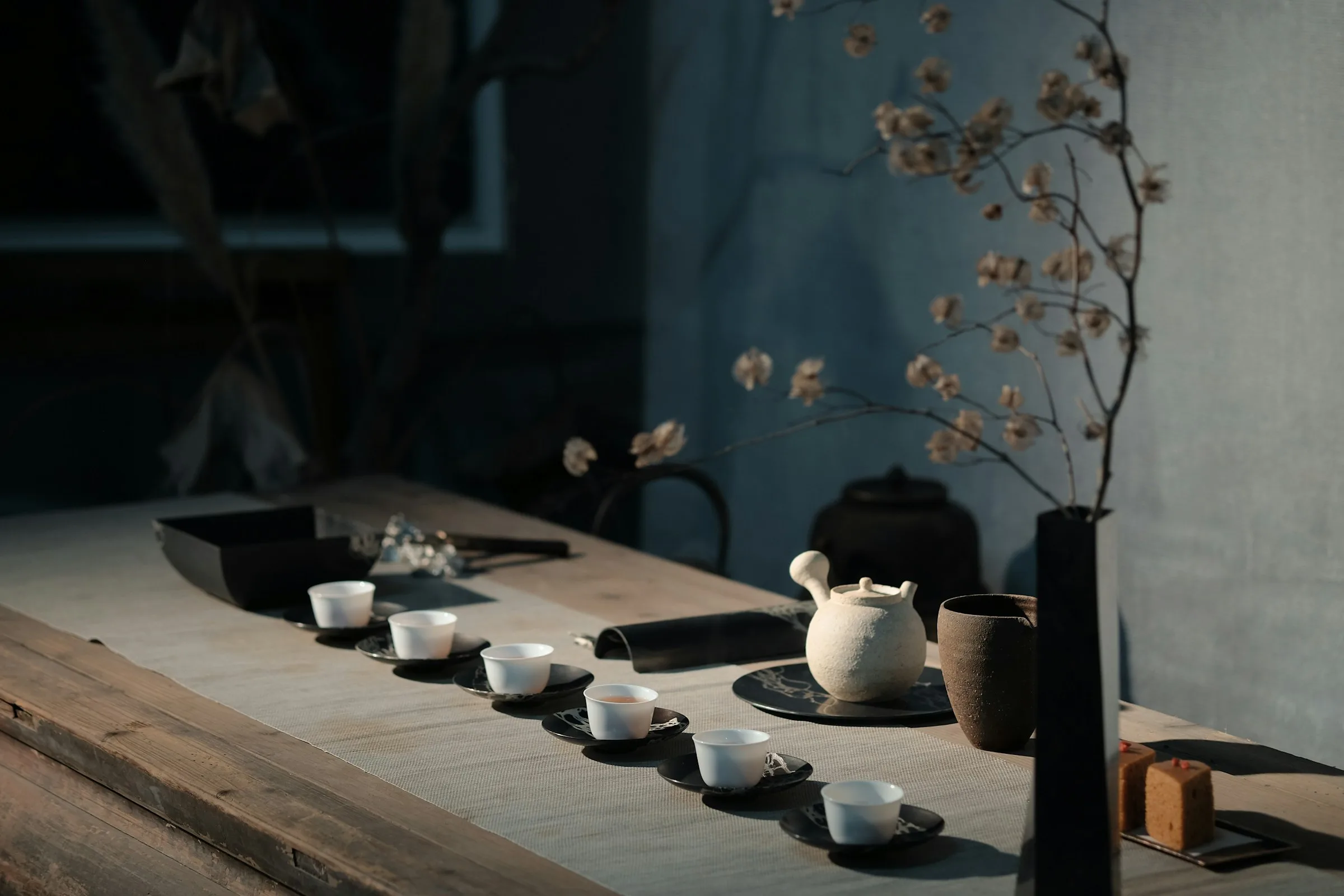
We brewed three cups at his table by the door. The water came from a spring above the garden, carried down in a plastic jerry can by his nephew earlier that week, and was heated to a temperature he judged by ear, taking the kettle off the flame when the boil softened from a rolling sound to a steady one. The leaf opened slowly. The liquor was the pale, slightly grey-green of new bamboo, and the smell off the first cup was vegetal and sweet, closer to fresh peas than to grass. The taste arrived in two parts: a quick brightness at the front of the tongue, and then, after a pause, a returning sweetness at the back of the throat that the locals call hui gan, the sweet that comes back.
We asked, over the second cup, about the fog. Luo thought for a while. The fog, he said, is the reason Duyun is a tea mountain and not just a mountain. It slows the leaf. A bush that lives in cloud for two hundred days a year grows more slowly than a bush in full sun, and the slow leaf carries more of the compounds that give the cup its sweetness, the theanine and the soluble sugars, and less of the bitterness from the polyphenols. He did not use the chemistry words. He said the cloud feeds the leaf, and the leaf remembers, and the wrist in the wok is only trying not to undo what the cloud has done.
By mid-morning the fog had begun to lift off the lower slopes and the pickers were coming down the path with their baskets. Yang Xiufen was weighing the morning's haul on a small spring balance hung from a beam. Luo walked us to the gate, hands in his apron pockets, and said come back in early April, when the first picking begins and the bud still carries the cold of the night. We said we would try. Walking down toward the village, the cane was still filling and tipping behind us, and above the garden the cloud was already settling back over the bushes for the rest of the day.
— ArtoEast
We design residencies, faculty-led programmes, and curated delegations around exactly this kind of work.
For universities, museums, cultural institutions, and other groups serious about understanding China at the level the essay above describes.
Programmes are designed bespoke. Tell us who is coming and what they are hoping to understand — we propose from there.
Start a conversation