ArtoEast
Reading a Ming caipu in a Quanzhou kitchen
A Quanzhou cook reads a 1612 caipu beside her winter kitchen, weighing which dishes survived four centuries on the page against one her grandmother carried only by hand.
The rain had been at the window since before dawn when Auntie Lin set the book down on the kitchen table, between a cleaver and a small dish of dried longan. The pages were photocopied — the original sits in a temperature-controlled case at Xiamen University — and bound clumsily in a red plastic cover that a former student had made for her in 1998. She did not open it immediately. She poured tea, three small cups of a thin Tieguanyin, and asked us whether we had eaten breakfast. We had not. She nodded once, as if this confirmed something, and only then turned to the first page.
The book is a Quanzhou caipu, a printed recipe text from the late Wanli reign of the Ming, somewhere around 1612, compiled by a minor official whose surname survives but whose given name does not. It runs to ninety-eight recipes, organised by season and by occasion, and it has been read seriously perhaps fifty times in the four centuries since it was set in type. Auntie Lin is sixty-seven, ran a small banquet kitchen in the Tumen Street neighbourhood for thirty-one years before her knees gave way, and now teaches an irregular Tuesday class to four students from the Quanzhou Maritime Museum's culinary research group. We had been introduced to her through one of them.
The photocopies smelled faintly of camphor, the way the originals smell, because the conservator at the university had left the master volume in a wooden chest with mothballs in it for too many summers and the paper had taken on the scent. Auntie Lin turned to a recipe she said we should hear first. It was a soup of mullet roe, pork rib, and a fermented bean paste called dou zha that the writer described as being made in the courtyards north of the Luoyang Bridge. She read the line aloud in the Hokkien pronunciation, then in Mandarin, and then said, in a flat tone, that she had made this soup perhaps two hundred times in her working life, that her mother had made it before her, and that the writer's proportions were wrong.
The bean paste, she explained, had to be older than he said. He wrote one hundred days. In her family's practice, it was one hundred and eighty, sometimes two hundred, depending on the autumn. We asked whether his recipe was simply a different lineage. She thought for a moment, looking out at the rain on the courtyard tiles, and said it was possible. Or, she added, he was a literate man recording from memory what an illiterate cook had told him, and the cook had rounded the number down because one hundred was easier to write than one hundred and eighty.
“In her family's practice, it was one hundred and eighty, sometimes two hundred, depending on the autumn.”
We spent the morning moving through the book in this way. Roughly half of the ninety-eight recipes are still cooked, she said, somewhere in Quanzhou, by someone. A clam soup with sour plum has become a wedding banquet standard in the villages south of the city. A pork belly braise with red yeast rice has migrated into the dim sum kitchens of Xiamen and from there into the Cantonese diaspora, where it now appears on menus in Penang and San Francisco under names the original writer would not recognise. A chilled jellyfish dish with sesame oil and garlic survives almost unchanged, she thought, because it requires nothing the modern kitchen lacks.
The other half are gone, or close to gone. A roasted civet preparation she would not cook now even if the law permitted. A boiled bear paw described in three sentences that read, she said, like a man who had eaten the dish once at someone else's house and tried to write it down afterwards. A particular use of preserved kumquats in fish steaming that she has never tasted, because the kumquats described in the book are a variety that stopped being grown around Anxi in the late Qing. The recipe is intact on the page. The ingredient has dissolved out from under it.
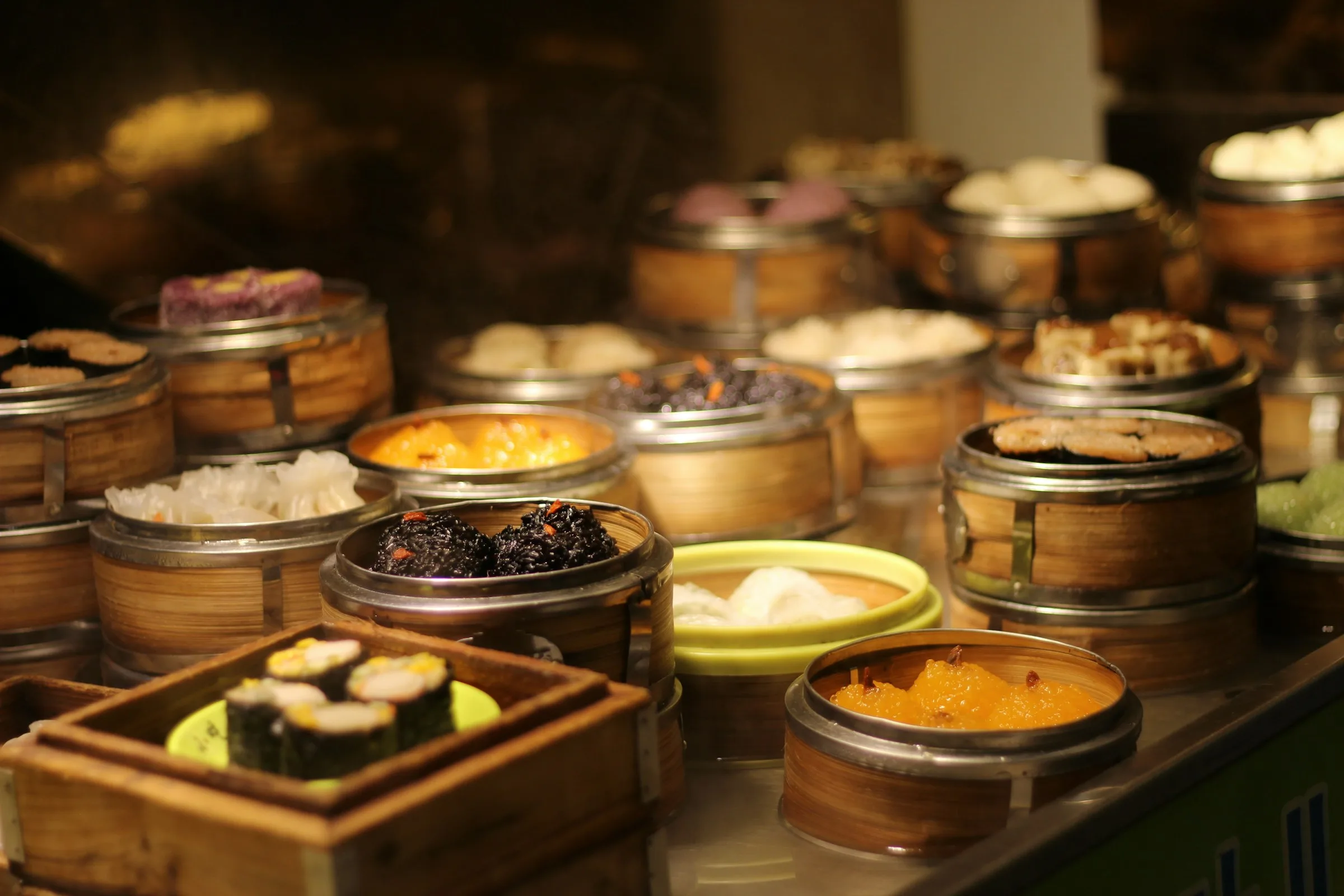
By late morning the rain had eased and her grandson, who is nine, came in from the lane with a plastic bag of pork bones from the morning market. Auntie Lin set the book aside and began trimming. She told us, while she worked, about a dish her own grandmother had cooked every winter solstice. It was a dumpling stuffed with mullet roe, glutinous rice, peanuts, and a small amount of the same long-fermented bean paste from the soup that morning, wrapped in a thin wheat skin and steamed in bamboo over a stock made from dried oysters. The wrapping was unusual for the region. The combination of seafood roe and peanuts inside a wheat skin was, as far as she knew, particular to her grandmother.
She had looked for this dumpling in the caipu, she said, the first time she read the book in 1991. It was not there. She had looked in three other Ming and Qing Fujianese recipe collections at the provincial library. It was not there either. She had asked an older cousin in Shishi who confirmed that the grandmother had made it, and that the grandmother's mother had made it, and that they had no idea where it had come from. It existed in one family, in one month of the year, transmitted by hand and by smell for at least four generations, and it appeared nowhere in the written record of Fujianese cookery.
We asked her what she thought had happened. She did not answer immediately. She finished trimming the bones, set them in cold water, and washed her hands. Then she said the question had two shapes. One was whether the writer had simply not encountered the dumpling — the courtyards he had visited had been wealthier, more literate, more closely tied to the official kitchens of the city, and her grandmother's people had lived in a fishing village on the coast where a cookbook writer might not have stopped. The other shape was harder. It was the possibility that he had encountered it, eaten it perhaps at a winter solstice meal, and chosen not to transcribe it, because it did not fit the categories his book was organised around, or because the cook would not give him the proportions, or because he thought it was not the kind of dish that belonged in a printed text.
She poured another round of tea. Either way, she said, the dumpling had survived the omission. It had survived because her grandmother had made it every December for sixty years, and her mother for forty, and she had made it for thirty-one, and her daughter-in-law in Xiamen now made it too, with slightly less peanut and a little more roe. The book was an incomplete document. The kitchen was a more complete one. We watched her set the stock on, the rain returned to the tiles, and the dumplings, when they came, were eaten without comment.
— ArtoEast
We design residencies, faculty-led programmes, and curated delegations around exactly this kind of work.
For universities, museums, cultural institutions, and other groups serious about understanding China at the level the essay above describes.
Programmes are designed bespoke. Tell us who is coming and what they are hoping to understand — we propose from there.
Start a conversation