ArtoEast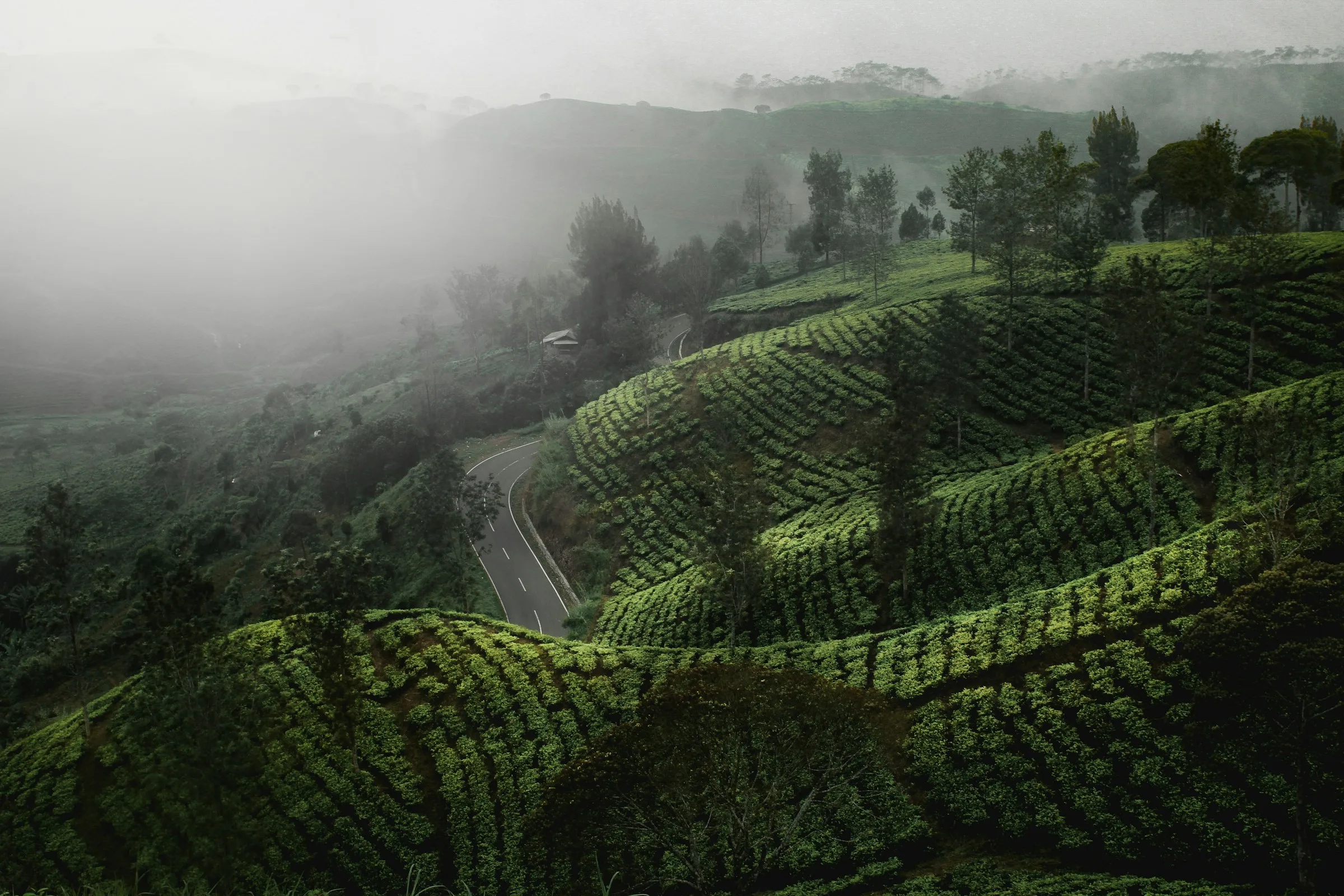
Pu'er forest mornings, before the road
In the Yiwu mountains of southern Yunnan, we attend a single day's harvest from trees older than the Qing dynasty, and the slow argument of fermentation that follows.
The road to Yiwu narrows after Mengla, then narrows again, and by the time we leave it for the footpath above Mahei village the fog is still sitting in the valley like something poured. It is 5:40 in the morning. Ai Leng walks ahead in rubber boots, a woven bamboo basket strapped across her back, and she does not speak for the first twenty minutes. The path is slick with last night's rain. Camphor leaves, crushed underfoot, release a smell that is somewhere between menthol and old wood, and this is the smell we will carry with us all day, in our hair, in the lining of our jackets, in the first cup of tea at noon.
Ai Leng is Dai, thirty-four, and she has been picking from these trees since she was nine. Her family tends roughly forty ancient trees on this slope, each one named, each one mapped in her head the way another person might hold the layout of a childhood house. The oldest, she tells us when we finally stop to rest, is called Lao Po, old grandmother, and is somewhere between six hundred and seven hundred years old. No one is certain. The county did a survey in 2009 and put a small metal tag on the trunk, but the tag fell off two winters later and no one has replaced it.
We sit with her for an hour before she touches a leaf. This is not for our benefit. The picking starts when the fog begins to lift, not before, because wet leaves bruise in the basket and bruised leaves ferment unevenly later. She explains this without explaining it, the way a baker might mention the temperature of a kitchen. Two leaves and a bud, never three, never the older darker leaves below. Her hands move quickly once she begins. By eight o'clock the basket is a third full and the sun has cleared the ridge.
The gushu trees here are not what most outsiders picture when they hear the word tea. They are trees, properly trees, twelve and fifteen meters tall, branching wide, growing among wild fig and camphor and the occasional banana. There is no row, no terrace, no pruning. A plantation tea bush, the kind that covers the hills around Menghai in geometric green corduroy, lives perhaps forty years and yields three or four flushes a season. These trees were here when the Ming dynasty was still consolidating its southern border. They yield, in a good year, maybe two kilos of finished mao cha each.
Down the mountain at midday we sit with the withering. Ai Leng's brother-in-law, Yan Han, has cleared the courtyard of his wooden house and laid out flat bamboo trays in the sun. The leaves go on in a single layer, no thicker than a finger. He turns them every forty minutes with the flat of his hand. The leaves lose roughly a third of their weight by late afternoon and shift from a glossy spring green to something more olive, more pliant. This is sun-withering, sai qing, and it is the step that separates Pu'er from almost every other tea in China. Green tea is fired immediately to kill the enzymes. Pu'er is left alive.
“The tea has spent four hundred years putting its roots through this particular soil, and you can taste, if you are paying attention, the slow patience of that.”
What happens next is the long argument. The dried leaves, once compressed into bricks or cakes, will continue to ferment for years, sometimes decades, depending on how they are stored. A sheng cake aged twenty years in a Hong Kong warehouse, humid and warm, tastes nothing like the same cake stored in dry Kunming. The microbes do different work. Yan Han keeps a 1998 brick on a shelf in the main room, broken in half, and pours us a bowl from it after the withering is done. It is the color of old amber and tastes, somehow, of forest floor and dried apricot. There is no astringency left. The tea has spent twenty-eight years becoming itself.
The co-op presses bricks twice a month in the village hall. We walk over after lunch. Six women, four men, one stone mold that has been in continuous use since 1987 according to the date scratched into its side. The mao cha is steamed for forty seconds in a small metal canister, tipped into a cotton bag, twisted at the top, and pressed under the stone for ninety seconds. Each brick weighs 357 grams, the old tea-horse road weight, sized so that seven bricks make a tong and twelve tongs make a horse-load. The math is older than anyone in the room.
Lao Yang, who runs the press, asks where we are from and then, without waiting for an answer, tells us about 2014. That was the year a single kilo of Lao Banzhang gushu sold for the equivalent of eight thousand US dollars and the entire mountain went briefly mad. Speculators came up from Guangzhou. Families who had been picking for generations found themselves negotiating with men in pressed shirts who had never seen a tea tree. Then the bubble broke, and the price for second-tier gushu fell by sixty percent in eighteen months, and several co-ops that had borrowed against future harvests folded. Prices have climbed again since 2021, more slowly, more sustainably he hopes, but no one here trusts the market the way they used to.
Ai Leng's sister, Yu Han, comes back from the kitchen with a thermos and joins us. She left for Kunming in 2016 to work in a tea wholesale office, came back in 2022. She does not romanticize either decision. In Kunming she learned spreadsheets and the names of European buyers and how to write a contract in English. Here she can stand on the porch and tell us, by the angle of light through the canopy, which trees on the south slope are ready for the second flush. Both kinds of knowledge, she says, are useful. Neither is sufficient on its own.
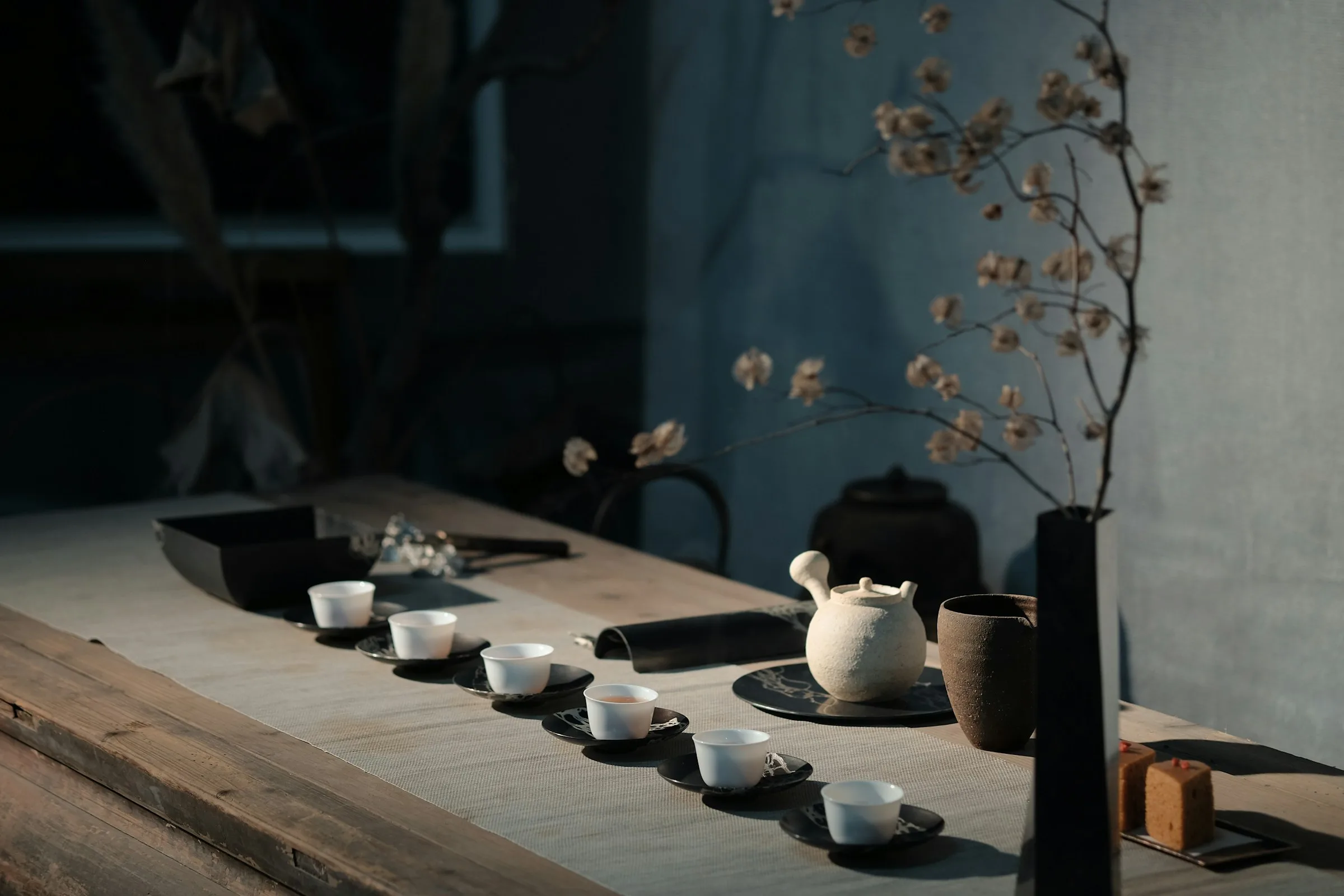
We taste plantation tea and forest tea side by side before we leave, in small white porcelain cups, the way it is done. The plantation tea is bright, grassy, slightly sharp at the back of the tongue, and finishes quickly. The forest tea from Lao Po's flush three weeks ago is quieter on the first sip, almost shy, but it keeps opening. There is a sweetness that arrives after you swallow, a returning sweetness called hui gan, and then a coolness in the throat that the Dai call sheng jin, the rising of saliva. The tea has spent four hundred years putting its roots through this particular soil, and you can taste, if you are paying attention, the slow patience of that.
We walk back to the truck in the late afternoon. The fog has not returned but the camphor smell has thickened with the heat. Ai Leng gives us a small paper packet of mao cha from this morning's basket, untwisted at the top, the leaves still smelling faintly of the mountain. She does not tell us how to brew it. She assumes, generously, that we will figure it out.
On the drive down toward Jinghong the road widens again and the plantation hills begin, geometric and green and efficient, and we understand for the first time that these are two different agricultures, two different relationships to time, and that the word tea covers both of them only because we have not yet bothered to invent a better word.
— ArtoEast
Photography by KIMO via Unsplash.
We design residencies, faculty-led programmes, and curated delegations around exactly this kind of work.
For universities, museums, cultural institutions, and other groups serious about understanding China at the level the essay above describes.
Programmes are designed bespoke. Tell us who is coming and what they are hoping to understand — we propose from there.
Start a conversation