ArtoEast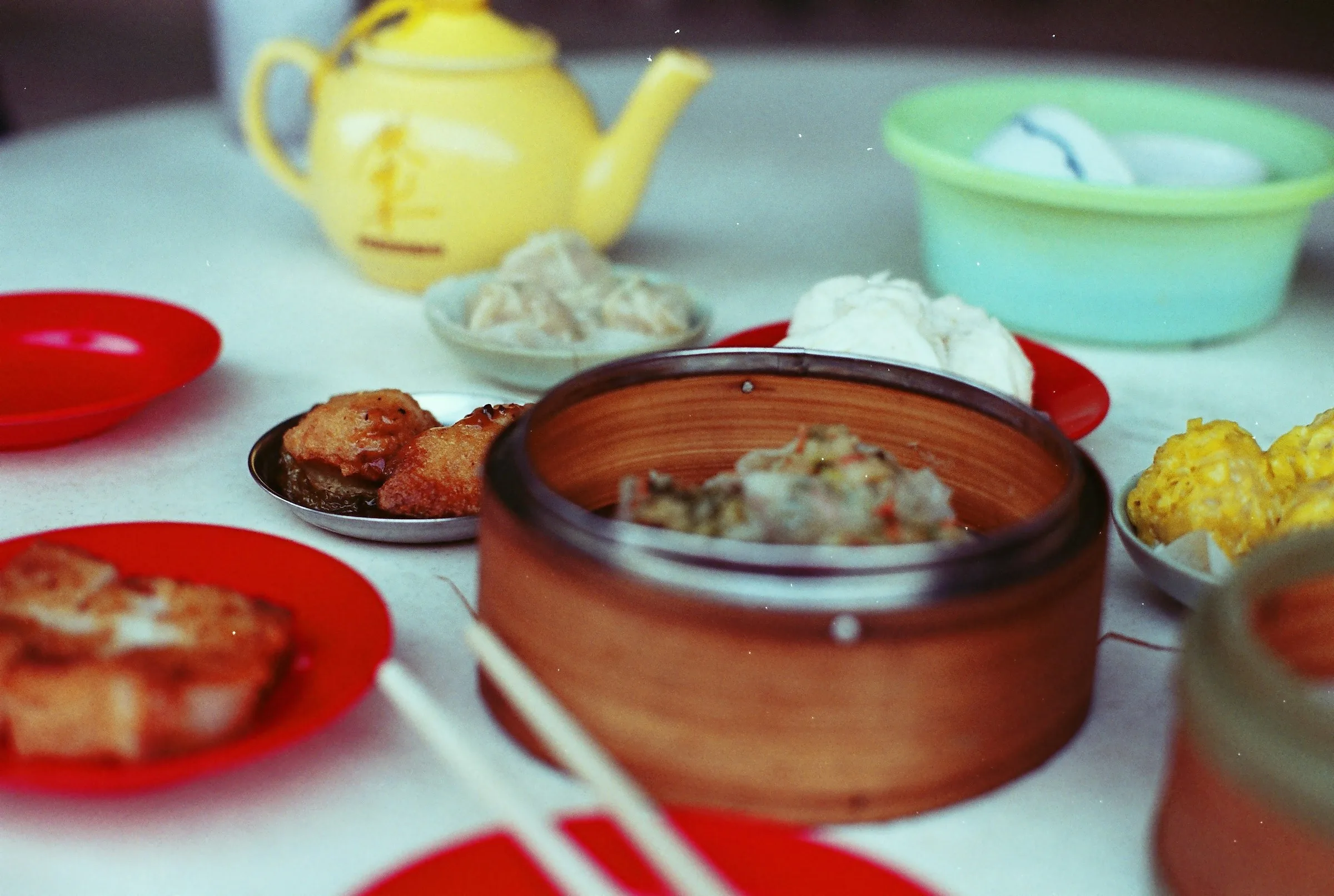
Yum cha from the kitchen side
Before sunrise in Liwan district, a kitchen of thirty cooks keeps two centuries of Cantonese morning ritual alive by counting pleats and pouring tea in a precise, unwritten order.
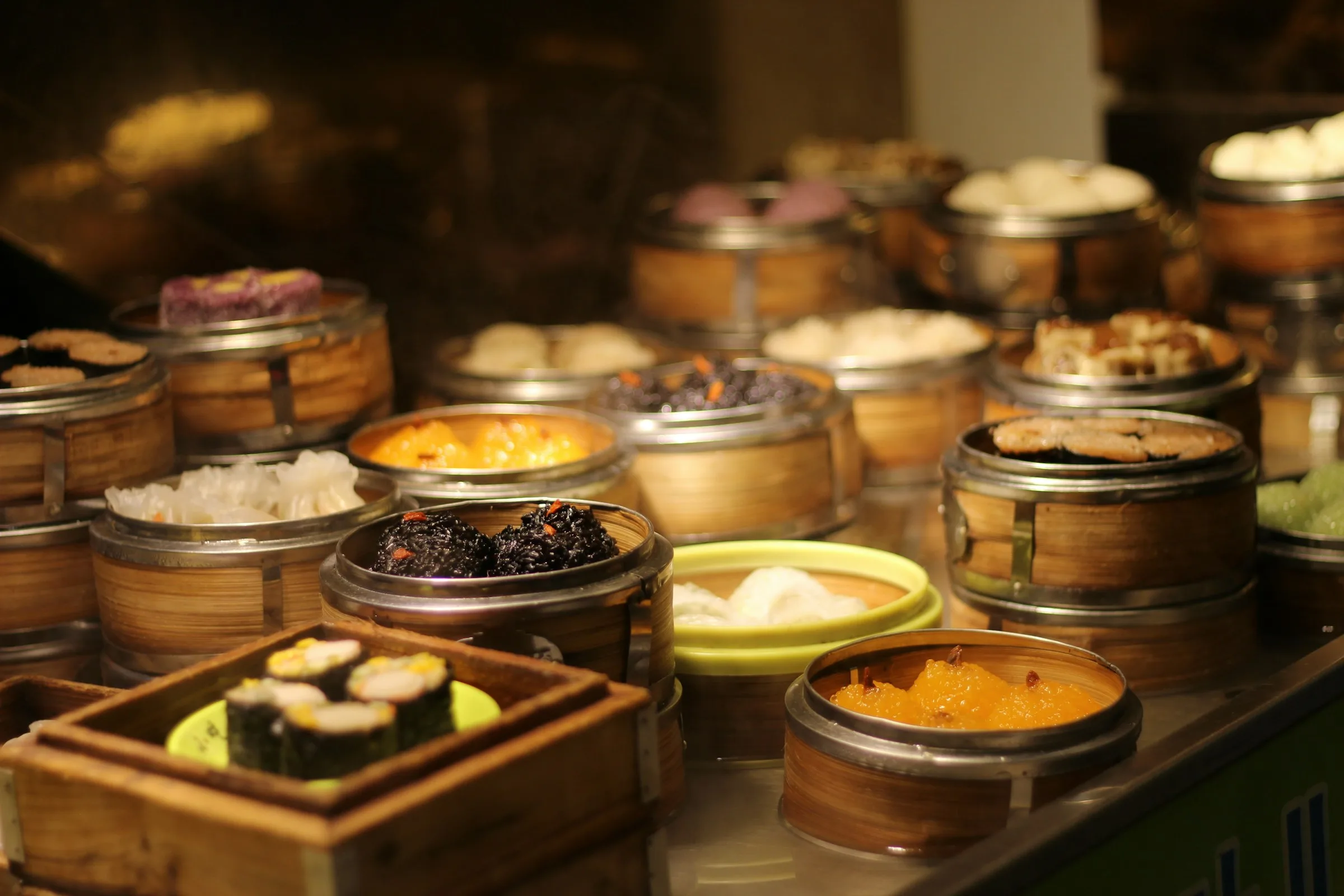
At ten past five the alley behind Lin Heung Lau on Wing Lok Street is still wet from the municipal hose, and the kitchen door is propped open with a stack of empty bamboo steamers tied with red twine. Inside, under a single fluorescent tube, Master Chan Wai-keung is folding har gow. He counts the pleats under his breath in Cantonese: yat, yi, saam, sei, ng. Always thirteen. Twelve looks lazy, fourteen looks anxious. He has been doing this since 1992, when he started pushing a trolley at the old Liwan branch at fifteen, and his thumbnail has worn a small flat plane into the side of his right index finger from the press of the wrapper.
The first batch goes into the steamer at 5:47. The water beneath has been on a low simmer since four. Cheung fun sheets are pulled at the next station by a younger cook named Ah Fai, who spreads rice slurry across a flat steel tray with the back of a copper ladle, slides it into a cabinet steamer, waits forty seconds, then peels the cooked sheet up in one continuous motion. The sheet is the width of a forearm and translucent enough to read newsprint through. He folds it three times around a length of fried dough, cuts it into four, slides it onto a plate, and shouts cheung fun gor toward the pass without looking up.
We sit on a low stool near the pastry bench and watch. The kitchen runs in Cantonese, fast and overlapping, full of the kind of compressed verbs that don't survive translation. Outside the swing door, in the dining room being set with teapots, the conversation between the floor manager and the new servers from Hunan and Guangxi is in Mandarin. The language changes at the threshold. Master Chan says this without complaint when we ask about it later, drying his hands on a folded towel tucked into his apron string. Putonghua for the guests, he says. Gwong dung wa for the dough.
By six the trolleys are being loaded. There are four of them, stainless steel, each with a brass bell wired to the handle. The bells are not decorative. They are how a trolley pusher signals her arrival to a table whose attention is on a newspaper or a grandchild. The oldest trolley, the one assigned to the front room, is from 1987 and has a small dent in the lower shelf where, family legend has it, a regular once knocked it with his cane to demand a second round of lotus paste buns. The cane is gone. The dent stays.
“The pleats are still thirteen. The pu'er is still poured first. But the room reads differently, louder, less ritual.”
Morning yum cha and afternoon yum cha are different meals served in the same room, and the kitchen treats them that way. Morning is for the regulars, the retired men and the early market traders, and the menu skews savoury and restorative: congee with century egg, har gow, siu mai, cheung fun, a bowl of pickled mustard greens to cut the richness. Afternoon, after two, is for families and tourists, and the trolleys carry more sweets, more deep-fried items, the egg tarts that photograph well. The pleats are still thirteen. The pu'er is still poured first. But the room reads differently, louder, less ritual.
The tea selection at this hour is governed by an unwritten agreement between the kitchen and the regulars. Pu'er for the men over seventy, because it cuts grease and warms the stomach on a damp Guangzhou morning. Shou mei for the women, lighter, paler, less aggressive on an empty stomach. Tieguanyin for the in-between crowd, the forty-somethings who arrive at seven-thirty with a laptop bag. Master Chan rinses the leaves himself for the first table of the morning, a courtesy he has not delegated in three decades, pouring the first steeping into a waste bowl and the second into small cups warmed by the discarded water.
That first table is a standing reservation. Six men, all between seventy-six and eighty-four, who have been coming on Sundays since the winter of 1992. They sit at the round table nearest the window, the one with the slight wobble that the floor manager has stopped trying to fix because the men have grown used to wedging a folded napkin under the south leg themselves. One of them, Mr. Ho, was a primary school principal in Yuexiu. Another, Mr. Leung, drove a taxi for thirty-one years. They do not order. The trolleys come to them in a sequence the kitchen has memorised: har gow, then cheung fun with shrimp, then chicken feet, then a single plate of turnip cake to share, then congee at the end if anyone is still hungry.
We ask Master Chan, in the lull between the first and second rush, what has changed. He thinks for a long time. The flour, he says eventually. The wheat starch used to come from a mill in Foshan that closed in 2009, and the new supplier's starch is half a degree finer, which means the wrappers tear more easily if you are tired or distracted. He compensates by adding a teaspoon more tapioca per batch. Nobody notices. He notices. He says this without pride and without complaint, the way a person describes the weather.
The other change is harder to name. Brunch, he says, using the English word, which sits oddly in the middle of his Cantonese sentence. The young people want to come at eleven, not seven. They want the room quieter, the light better for photographs, the tea served in a glass pot so they can see the colour. The kitchen accommodates this. The trolleys still leave at six for the regulars, but a second service starts at ten-thirty now, with a printed menu and a QR code on the table. Master Chan does not work the ten-thirty shift. He goes home at nine-thirty, sleeps until two, comes back at four to prep for the next morning.
**The pleats are still thirteen. The pu'er is still poured first. But the room reads differently, louder, less ritual.** What persists, in the kitchen at least, is the count. Thirteen pleats. Forty seconds for the cheung fun sheet. Twelve minutes in the steamer for the har gow, eleven for the siu mai, eight for the cheung fun. The numbers are not written down anywhere. They live in the hands of the eight senior cooks, who teach them to the twenty-two junior cooks by standing next to them for the first three months and tapping their wrist when the timing is off. Ah Fai has been here four years. He says his wrist still gets tapped, but less often.
At seven-forty we step out into the alley to let the kitchen breathe. The morning fog is lifting off the Pearl River two streets south. A delivery scooter idles past, the driver eating a bun from a paper bag. Through the propped door we can hear the bell of the front-room trolley, three short rings, which means a regular has signalled for a refill of hot water for his pot. Inside, Master Chan will be folding the next batch. Outside, the city is starting its other day, the one that runs in Mandarin and arrives at eleven. Both are real. The kitchen holds the earlier one, for now, by counting.
— ArtoEast
Photography by Tara B via Unsplash.
We design residencies, faculty-led programmes, and curated delegations around exactly this kind of work.
For universities, museums, cultural institutions, and other groups serious about understanding China at the level the essay above describes.
Programmes are designed bespoke. Tell us who is coming and what they are hoping to understand — we propose from there.
Start a conversation